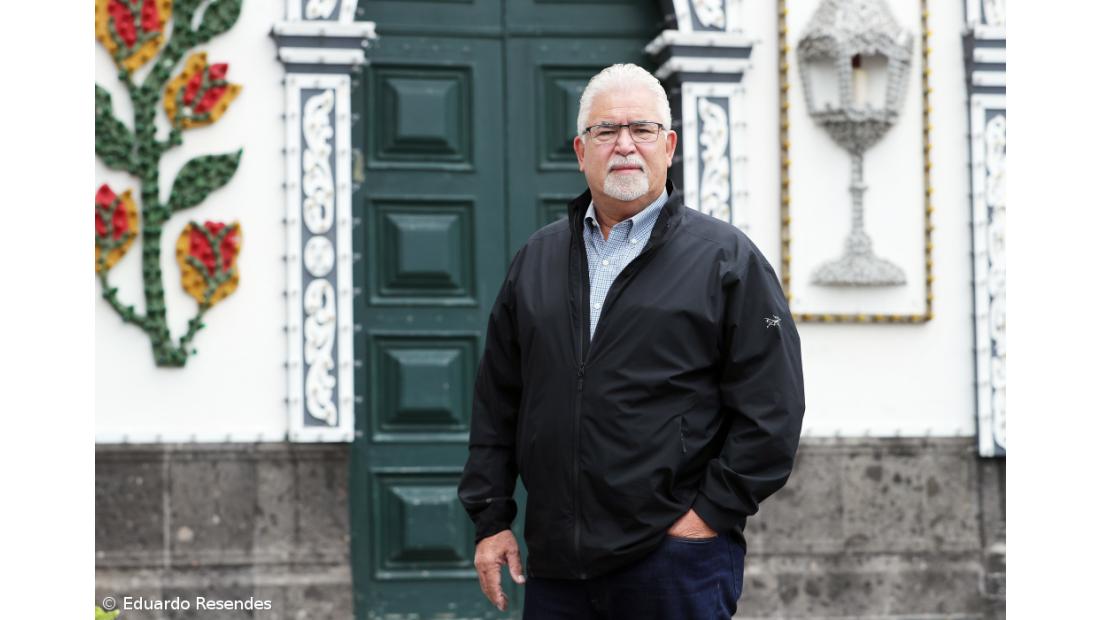
When did your devotion to the Holy Christ begin?
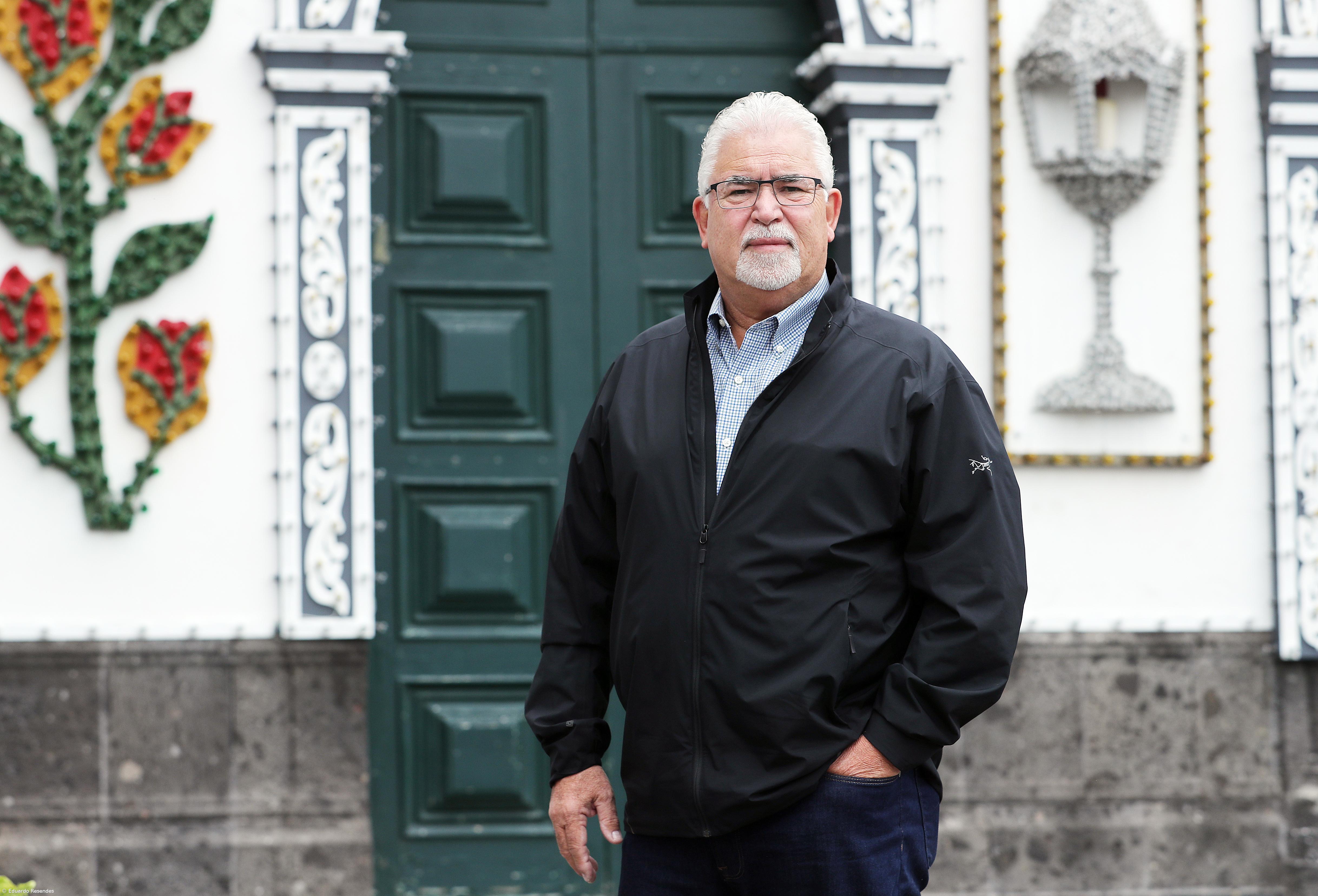
My devotion began about 25 years ago, through Monsignor Agostinho Tavares (deceased in 2015), who was the rector of the Shrine.
At that time I had a stroke and was paralyzed, I was hospitalized for about five months and the medical specialists said I would be in a wheelchair.
Monsignor Agostinho then started calling me almost daily and in those calls he always spoke about the Lord Holy Christ.
That's when the great devotion I have today began, because I eventually regained movement after the stroke I had.
Later, I was contacted by my parish in Brampton to be in charge of the Brotherhood of the Holy Christ, which was created at that time.
And from that time until today, I have remained as a trustee of the Brotherhood of the Holy Christ of Brampton.
When did the Feast of the Lord of the Holy Christ start in Brampton, in the Toronto area, and what is the origin of the image of Canada's Holy Christ?
It will be 18 years next September.
As for the image of the Holy Christ, it came from the mainland and is similar to the image of the Holy Christ of Ponta Delgada.
The big difference between our festivities and those in Ponta Delgada is that in Canada we have Santo Cristo in the second week of September, closing the summer festivities in the Portuguese community in Canada.
In May, the month in which we celebrate Santo Cristo here in Ponta Delgada, it would be difficult to have the feast in Canada, because it is already a month of festivities in Toronto and other cities. So, to avoid having festivities on top of each other, we decided to do them in September.
Nowadays, the Brampton Lord Holy Christ of Miracles Feast is considered the biggest festival of the Portuguese community in Canada.
What are the main differences between the Feast of the Holy Christ in Canada and the one in Ponta Delgada?
For example, on Friday of the festivities we have what we call the 'Night of the Ill', which is mainly directed at the elderly, whom we pick up from the nursing homes and take to church.
Otherwise, we have the procession on Saturday and the main procession on Sunday.
In the festivities of Santo Cristo in Brampton thousands of people participate and we also always have a guest priest from the Azores.
And why is that? Because they are better acquainted with the Holy Christ’s history and devotion. Besides, the priests who come from the Azores always bring a word that the people in Canada are waiting to hear and that the priest from our parish, who is of Polish origin, can't transmit.
I have already brought our priest here to São Miguel so that he could experience at first hand our devotion to the Holy Christ. But, of course, not being Portuguese, he doesn't know our history and traditions from the ground up. Besides, part of the revenue from the Brampton Holy Christ festivities is given to needy families.
Is there much devotion to the Holy Christ in the Toronto area where you live and where the festivals are held in Canada?
The devotion in and around Toronto is diminishing, because in very big cities it is getting more and more difficult to get permits to close streets or even to light up church facades.
In Brampton, where I live, we are lucky to know many people connected with the municipality who still give us the permits to have our feasts on the public streets and with the church lit up.
The cape that will cover the image of Senhor Santo Cristo in this year's procession was offered by the Brotherhood of Brampton. In fact, the cover was supposed to come out in 2021, if it hadn't been for the pandemic that prevented the procession from taking place. How did the opportunity to offer this cape to the Holy Christ arise?
It all started in a Brotherhood meeting in which we talked about the need for some of our brothers to feel the 'strength' of the Lord Holy Christ transmitted to us when we carry the litter. I have already done so twice in the past.
After talking with the rector of the Shrine, Canon Adriano Borges, we decided to offer this cape two years ago, but only this year the cape went out in the procession.
This is a great pride for us, because the cape, which was made in Vila Franca, is the result of several ideas by the members of the Brotherhood, so each part of the cape has a little bit of us. We are 30 members and 25 are here in Ponta Delgada to participate in the festivities and procession.
I can give you the example of the cape’s design, which symbolizes the union between Canada and the Azores.
What does it mean for you and for the Brotherhood of the Holy Christ of Brampton to be almost entirely here in Ponta Delgada, so that its members can also have the opportunity to carry the litter of the Holy Christ for part of the way?
This is going to be perhaps the happiest day in the lives of some members.
We have been preparing for it for a long, long time and I have seen men with tears in their eyes at the thought of carrying the Holy Christ.
This is going to be a great pride for every single member of the Brotherhood of Brampton, although some of them will not be in a position to carry the litter. However, they will carry the lanterns.
In addition, and after talking with Mr. Carlos Faria e Maia, it was agreed that, during the early hours of Sunday morning, our Brotherhood of Brampton will do the guard of honor to Senhor Santo Cristo, which will also be a great pleasure for us.
In your opinion, why is it that the festivities and the devotion to the Holy Christ are so important to the Azorean communities spread around the world and particularly to those in the United States and Canada?
The Holy Christ cult is a tradition we inherited from our parents and grandparents.
That's why when you talk about the Holy Christ to an Azorean in the Diaspora, it's as if he is seeing the Holy Christ looking at him.
How do you assess the evolution of the Azores since you left 55 years ago?
I see that many things have improved. There is a lot of new construction here in Ponta Delgada.
I like what I see and I realize that many emigrants are coming back and many foreigners are coming here.
But there is the problem of air travel, with very expensive tickets. In Canada, people want to come here for tourism, but they find the tickets very expensive.
If you want to have tourism here and people coming here to spend money and help the Azorean economy, it shouldn't be so expensive to travel to the Azores, with tickets costing more than a thousand euros per person.
Regarding Canada, what are the main problems of the Azorean community living in the Toronto area?
There are more jobs than people wanting to work. It's not only here that people say that. This is a general problem.
After the pandemic, we noticed that it is very difficult for companies to find workers, even though life is hard, with prices going up.
Everything is going up in Canada, from the price of food to apartment rents.