What led you to organic production?
Seven years ago, UNICOL – Cooperativa Agrícola, C.R.L. launched the challenge of Organic Production to the producers of Terceira, and eight producers joined, including myself. Currently, we are 12 producers and many others are in "conversion mode".
As I read a lot and talk to many people connected to the sector, I started to realize that the conventional system practiced in the milk producing-islands intensified from year to year, trying to produce more and more milk per unit of area to face the low prices paid by the industry.
The stocking density increased (No. of Standard Heads/ha), as well as fertilizations, consumption of concentrated feed ("rations"), forage corn areas and the bet on high production animals (Holstein-Friesian) of American and Canadian lineages, which, as we know, are animals that have been improved to be stabled and not grazed, very demanding in terms of food and more sensitive in terms of health and reproduction. Many permanent stalls have been built, and all this has led to a big increase in production costs and even to a change in our rural landscape.
I concluded that we were producing in imitation of other countries, which were also producers of raw materials for the manufacture of animal feed – which we are not. Therefore, we were distancing ourselves from the guidelines of the new Common Agricultural Policy (CAP), that wants 25% of the agricultural surface to be in MPB in 2030 and 100% in 2050.
What changes did you make in your farm to produce organic milk?
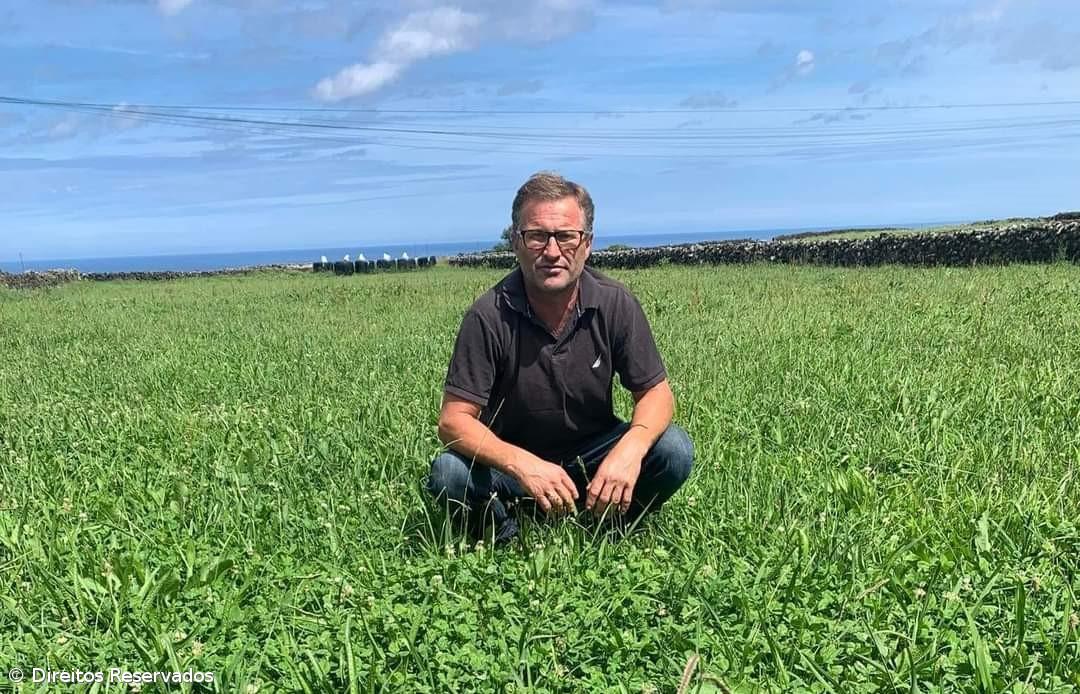
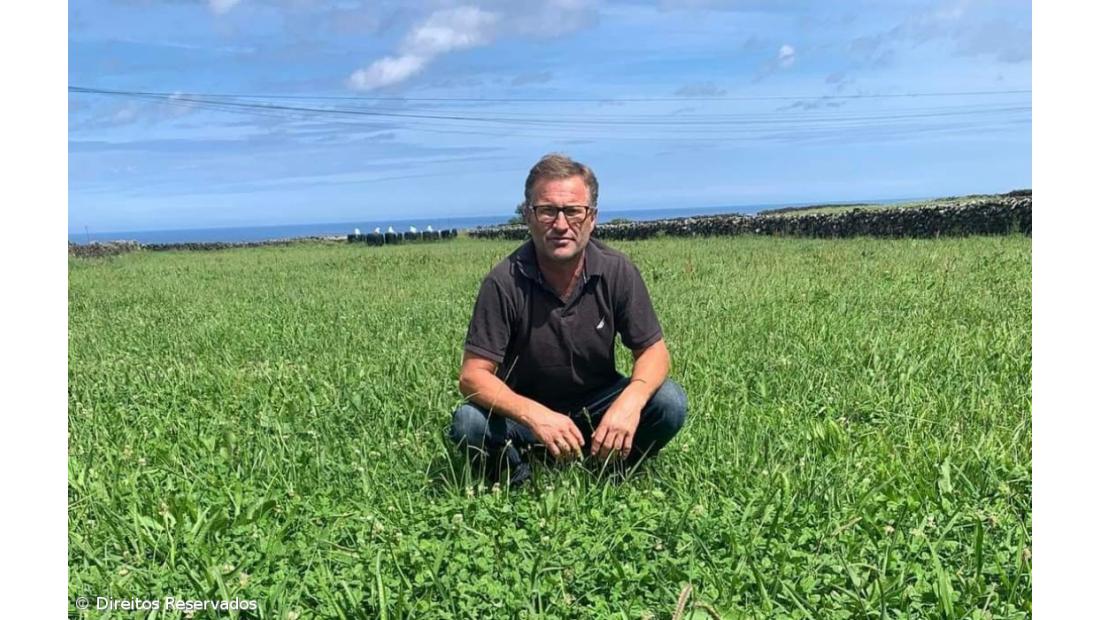
The changes were not significant because on my farm I always practiced pasture grazing and I couldn't have cows that were too big or too heavy, precisely to preserve the pastures. But I had, of course, to strictly follow the legislation. For example, I had to stop using nitrogen fertilizers that are not allowed in organic farming. But grasses need nitrogen in order to grow.
So I enriched the floristic composition of my 20 pasture plots with a great variety of clovers. These establish a symbiosis in their roots with some bacteria (Rhizobia) that take the Nitrogen that is in the atmosphere from the soil, supply it to the plants themselves and still leave some Nitrogen in the soil for the grasses.
In the case of OP, floristic compositions with many clovers are absolutely essential because they contribute to the environmental improvement by canceling the release of nitrous oxide from nitrogen fertilizers with a "greenhouse effect" much higher than Carbon Dioxide.
I would also say that in the Azores, whether conventional or organic, pastures rich in leguminous plants are important for reducing production costs; they also have a very positive effect on animal performance.
I also changed the fertilizers I used for phosphate and potassium fertilization, and started using only those approved for OP. I stopped using any type of phytopharmaceuticals, namely herbicides. In order not to have problems with weeds, I am very careful, on the one hand, to provide the necessary nutrients for the grass species to develop properly and, on the other hand, not to let the pasture be trampled, which would kill plants and/or leave areas of bare soil, which would be an entrance for weeds.
I always give the pasture enough area so that the instantaneous load is not too high and so that the animals don't eat below four to six centimeters, in order for the new growth to be faster. Concentrated feed has to be made from raw materials that are also produced in OP. The "feed" I use comes from Spain. Because of these two facts, it is more expensive than normal feed. That's why I only supply 1.5 kg of feed/cow/day.
It's a situation almost impossible to happen in the mainland and in many farms in the Azores that, for the most part, bet on the high productive genetics of the Holstein-Friesian breed.
These animals – highly productive and with very high conservation needs, but with a limited intake capacity, no matter how much good fodder and pasture they are provided with – will never be enough to externalize their productive potential. They must necessarily consume large quantities of concentrated feed on a daily basis. I know of cases in the Azores where up to 14Kg of "feed"/cow/day is necessary. In other words, a large part of the milk production is made with imported products, contributing to an increasing economic and "carbonic" unsustainability.
What is your average annual herd and which breeds do you favor?
I have an average of 33 cows, six to seven heifers, and an Aberdeen Angus bull. In total there are 42 Standard Head and, as I have 26 hectares, this results in a stocking density of 1.61 Standard Head/ha. Initially, the herd was all Holstein-Friesian, but smaller (less heavy cows) than those seen today, both on the mainland and in the Azores.
At the moment, I have been crossbreeding with Swedish Red, Jersey and, in the future, also with Norwegian Red. I wanted to increase the fertility of the herd, increase the milk solids and have even smaller animals with lower conservation needs, better adapted to grazing and with higher conversion rates (grass/milk).
Thinking about the future, specifically in a new type of milk for people who have difficulties digesting normal milk, I genotyped my cows to determine which ones have the two A2A2 beta-casein genes and started inseminating them always with bulls that also carry these two genes, to be sure that the offspring will be homozygous and therefore to produce this type of milk.
It is expected that by 2029 the consumption of A2A2 milk will have more than quadrupled. Thus, I calculate that within three years, besides being a producer of organic milk, I will also be a producer of A2A2 milk, which is not yet marketed in our country, and has its origin in domestic production.
Thinking also about industrial efficiency, I hope that in a few years we will have the entire herd producing K-casein in its BB variant. By increasing the cheese making efficiency in about 10%, it is fair that the industry reflects this efficiency in the price paid to the producer.
Have you noticed any drop in production or repercussions in your income?
I had a drop in production of about 25%, but this decrease in income was largely compensated by the decrease in costs with "feed", nitrogen fertilization, medicines, and veterinary assistance, among other production factors.
I have very low production costs, I get official support for this production method, and the industry pays for this milk 12 cents more than the conventional rate. So, I can say that the change to this "Production Mode" has been, economically, an advantage.
What arguments could you use to encourage other producers to start this production method?
First, let me give a brief history of how the current situation of overproduction and low prices paid to production came about. In the 1980s, when negotiations for our integration into the European Economic Community (EEC) began, our productivity per cow was less than half the average of the countries that made up the EEC. Since there was a quota system, it was decided to start a program of experimentation and dissemination so that, when we joined, we would be assigned a production quota that would not be much below the European average. In fact, the strategy was very well worked out, and when we joined the EEC, we did so with a doubled production.
Years of splendor went by, with good prices paid to producers, low input prices, and with production always increasing, and with many or all fines for exceeding the quota forgiven.
Meanwhile, the EEC, now called the European Union, decided to liberalize the dairy sector as of April 1, 2015. A new cycle began. A cycle of declining income for Azorean producers. Many countries, with greater technological capacity, greater technical support for producers and with available land, greatly increased their production, which was reflected in the price of milk in the Azores.
Meanwhile, voices have begun to be raised in defense of the environment, against climate change, against the lack of biodiversity, against soil pollution in rivers and lakes, against soil erosion, and in defense of animal welfare. We now have a new Common Agricultural Policy (CAP), aimed at a much different, much less intensive agriculture. Many still maintain that these changes will never reach the Azores, just as they said that abolishing milk quotas would not reach here either.
In answer to the question, I say that in agriculture, and in this case, as we say in the Azores, livestock farming, changes are naturally slow, as in any part of the world.
In order to have a gradual and smooth evolution, I believe that producers should, little by little, approach the major objectives of the CAP, a more sustainable and environmentally friendly livestock farming. To do this, they should improve their pastures by intercropping ryegrass and legumes (less or even zero nitrogen fertilization), adjust the stocking density of their farms according to the availability of grass and forage, adapt their herd to become more efficient in grazing (higher conversion rates), smaller animals so as not to damage the pastures, and, of course, use imported feed as little as possible and indispensable.
In short, to reduce little by little the costs of their farms, bringing their management closer to the unique conditions that the Creator has given us.
If some people think that this new livestock farming is a step backwards, I would tell them that it is an advance in civilization that future generations will be grateful for. Along with these measures at the farm level, a new approach is also needed from the industry regarding processed products. Greater diversification into products of greater commercial value, such as A2A2 milk and its derivatives, is necessary.