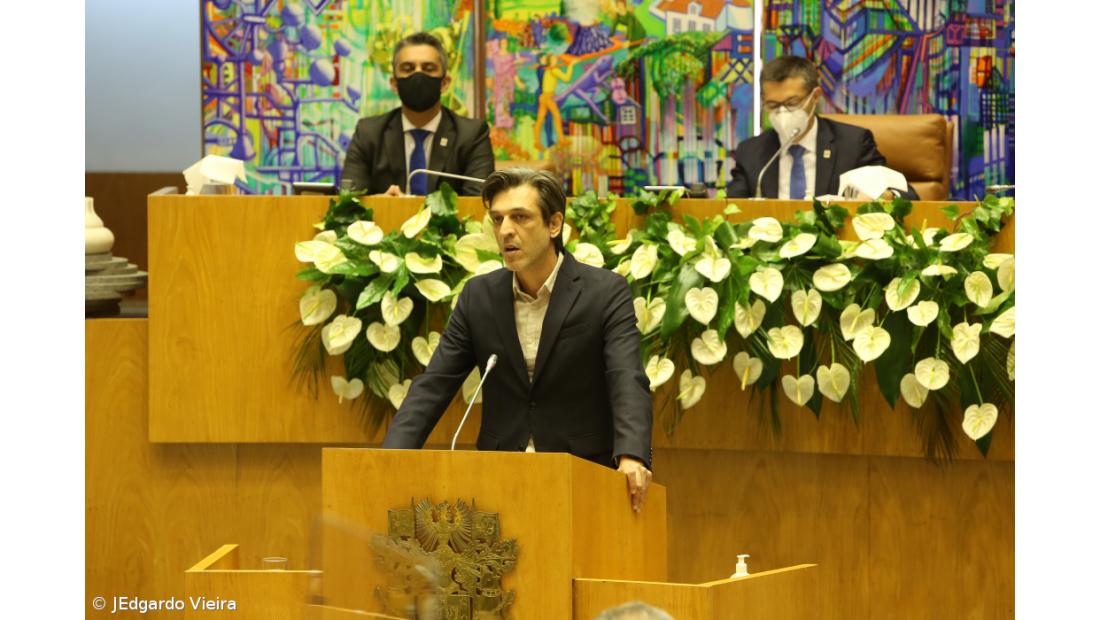
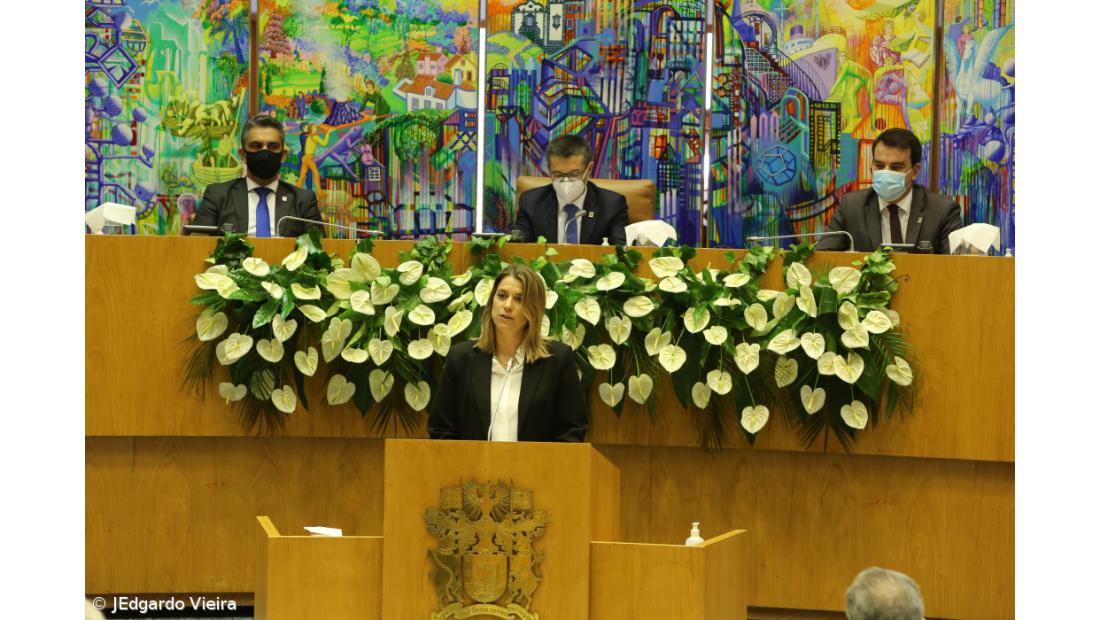
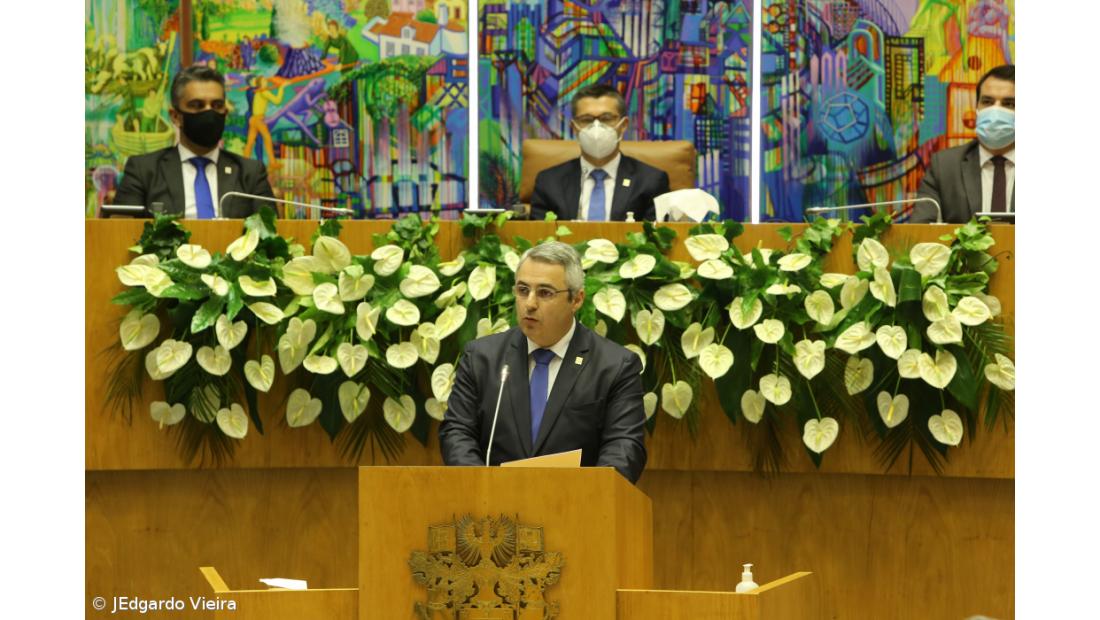
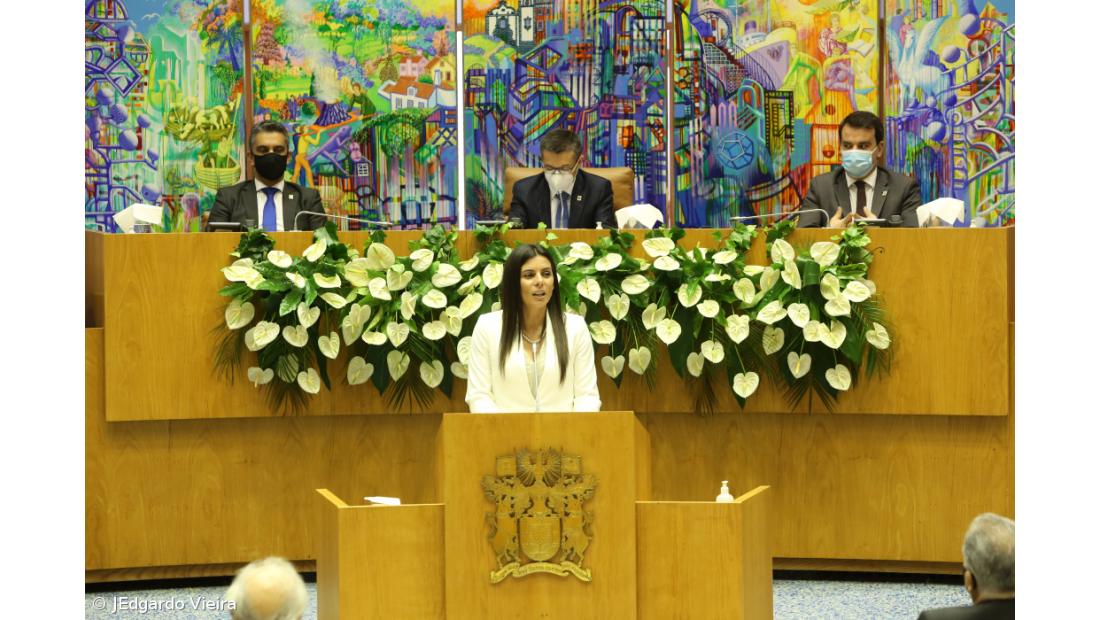
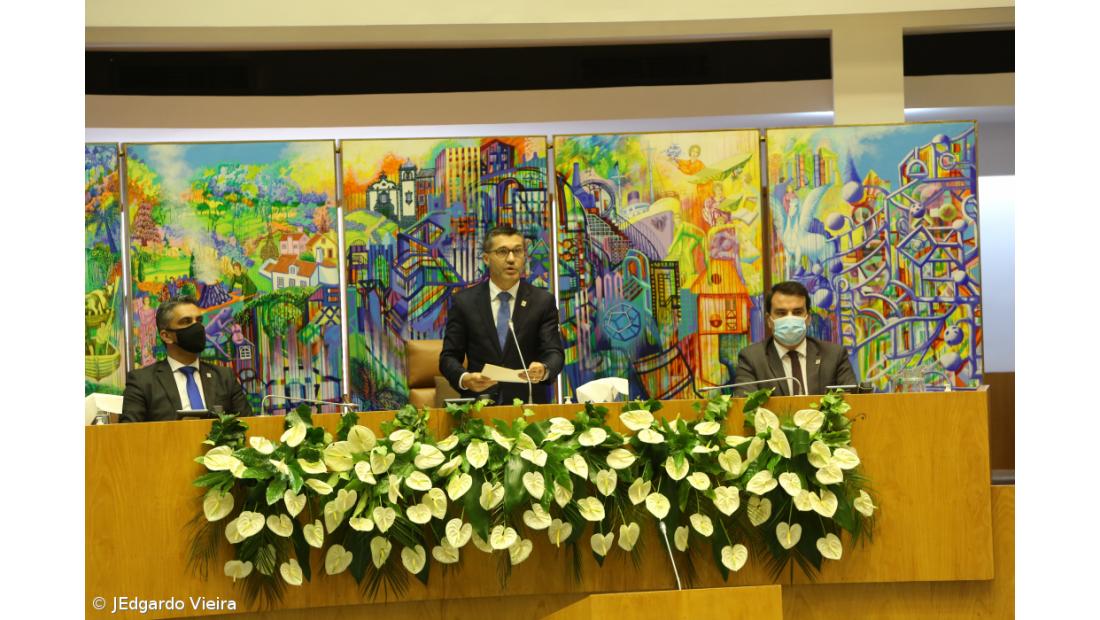
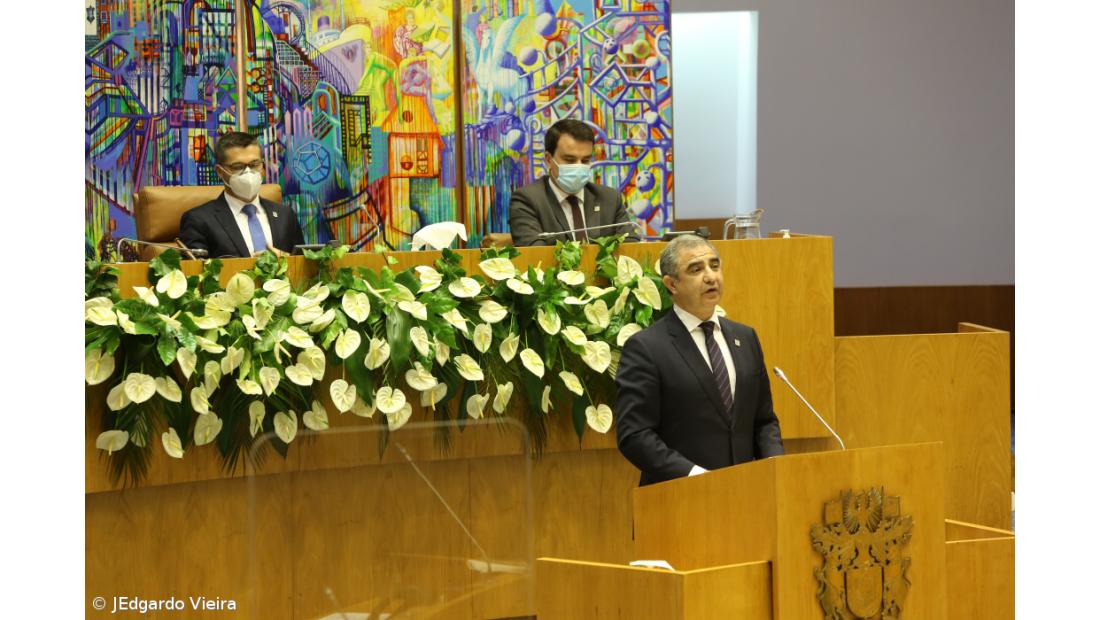
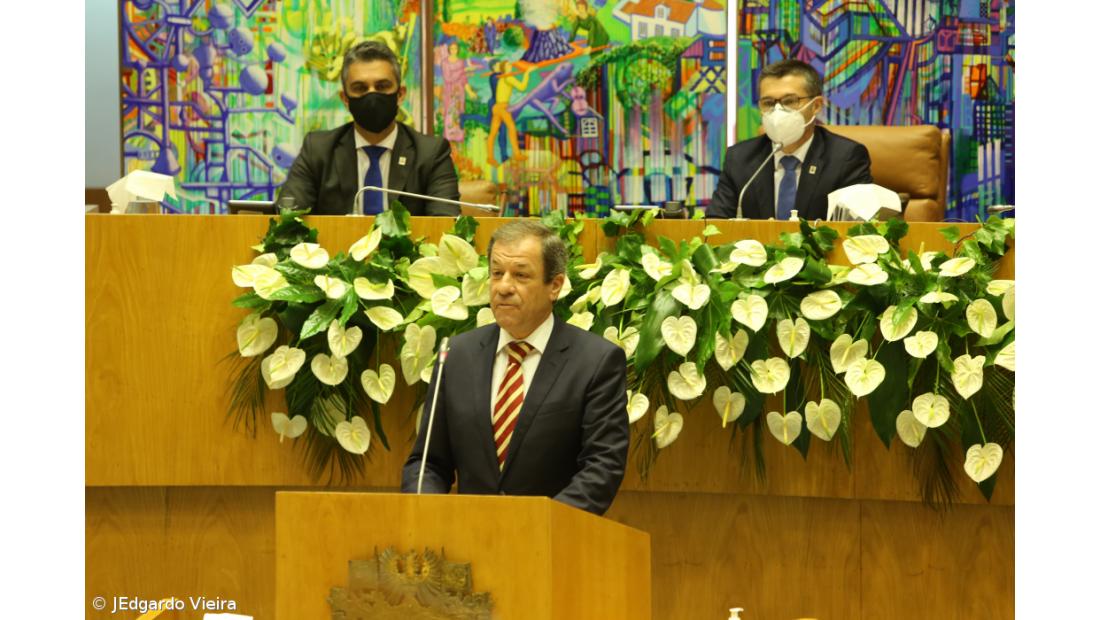
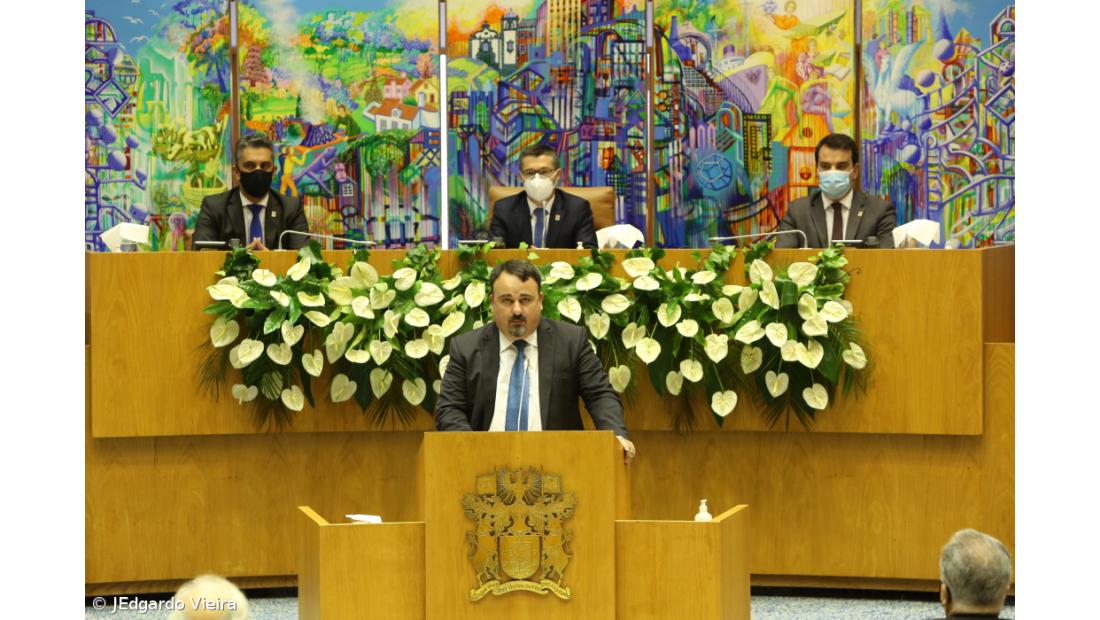
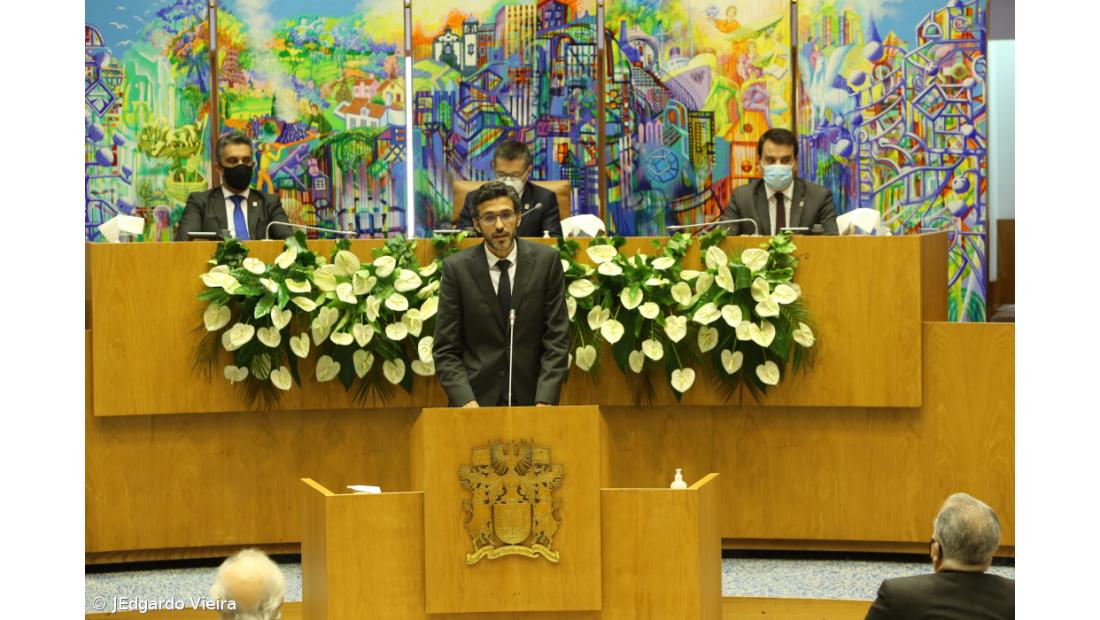
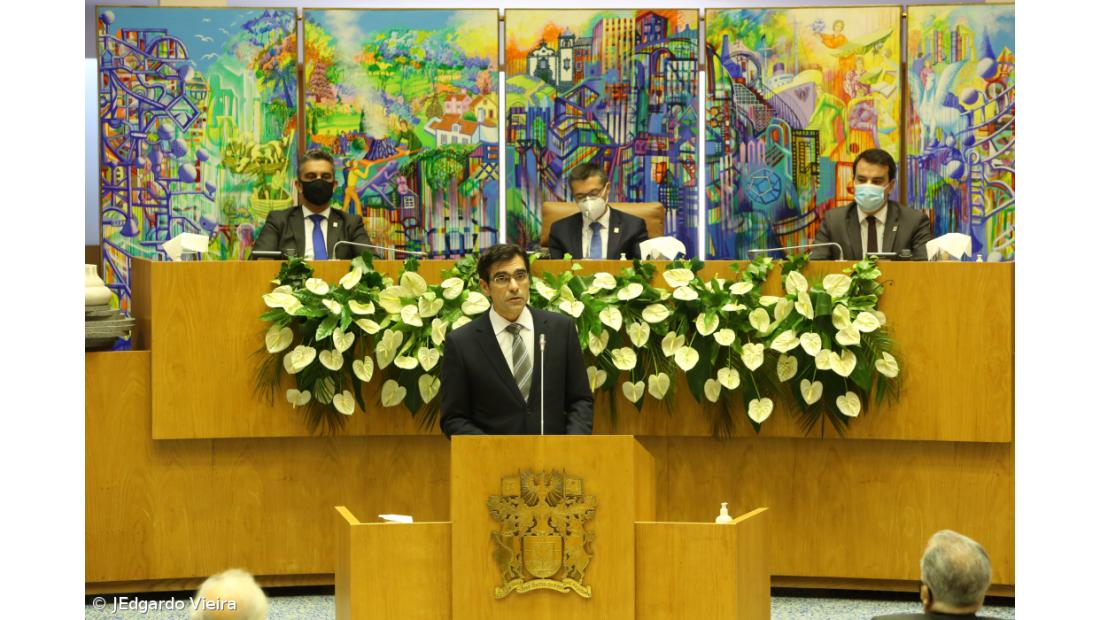
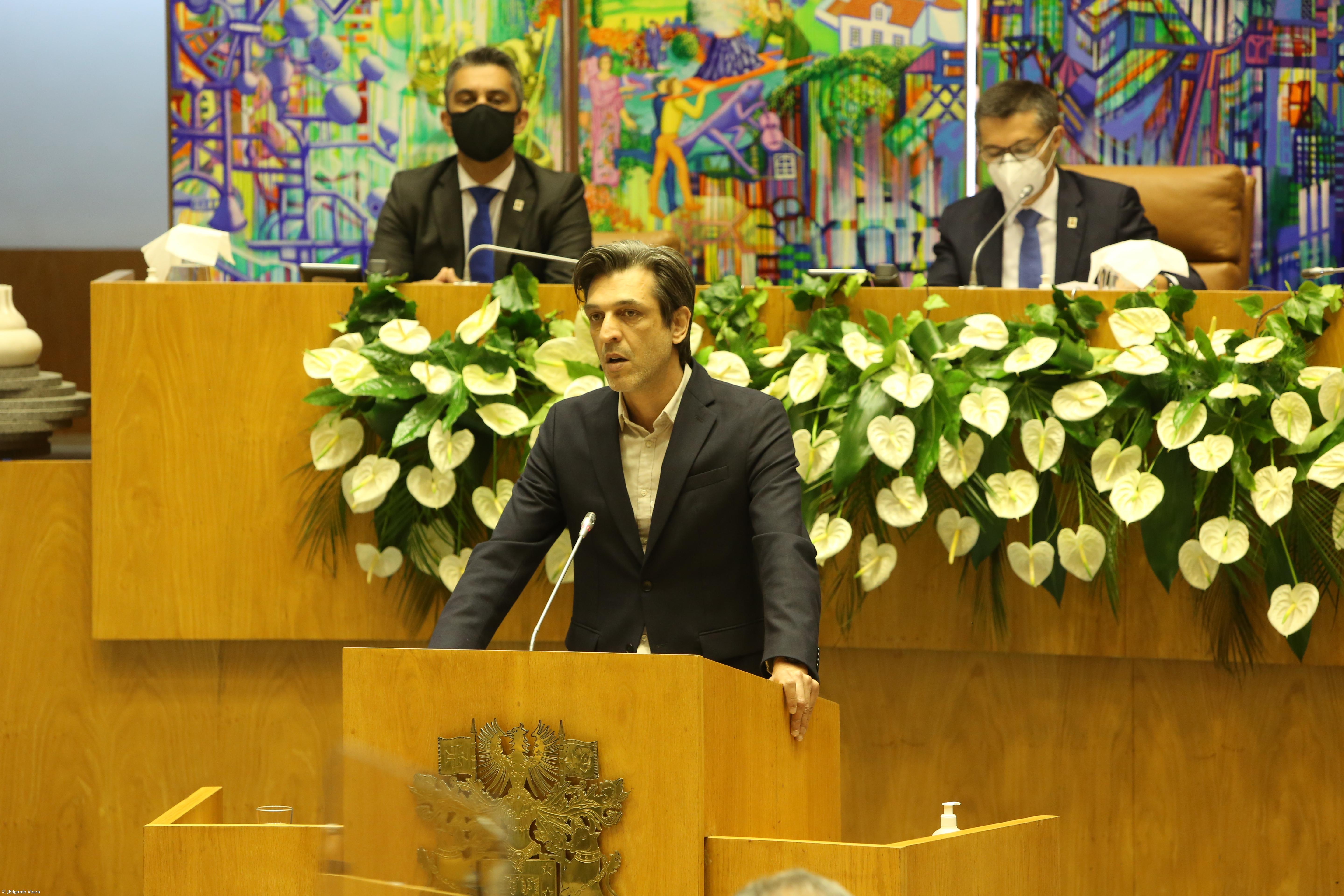
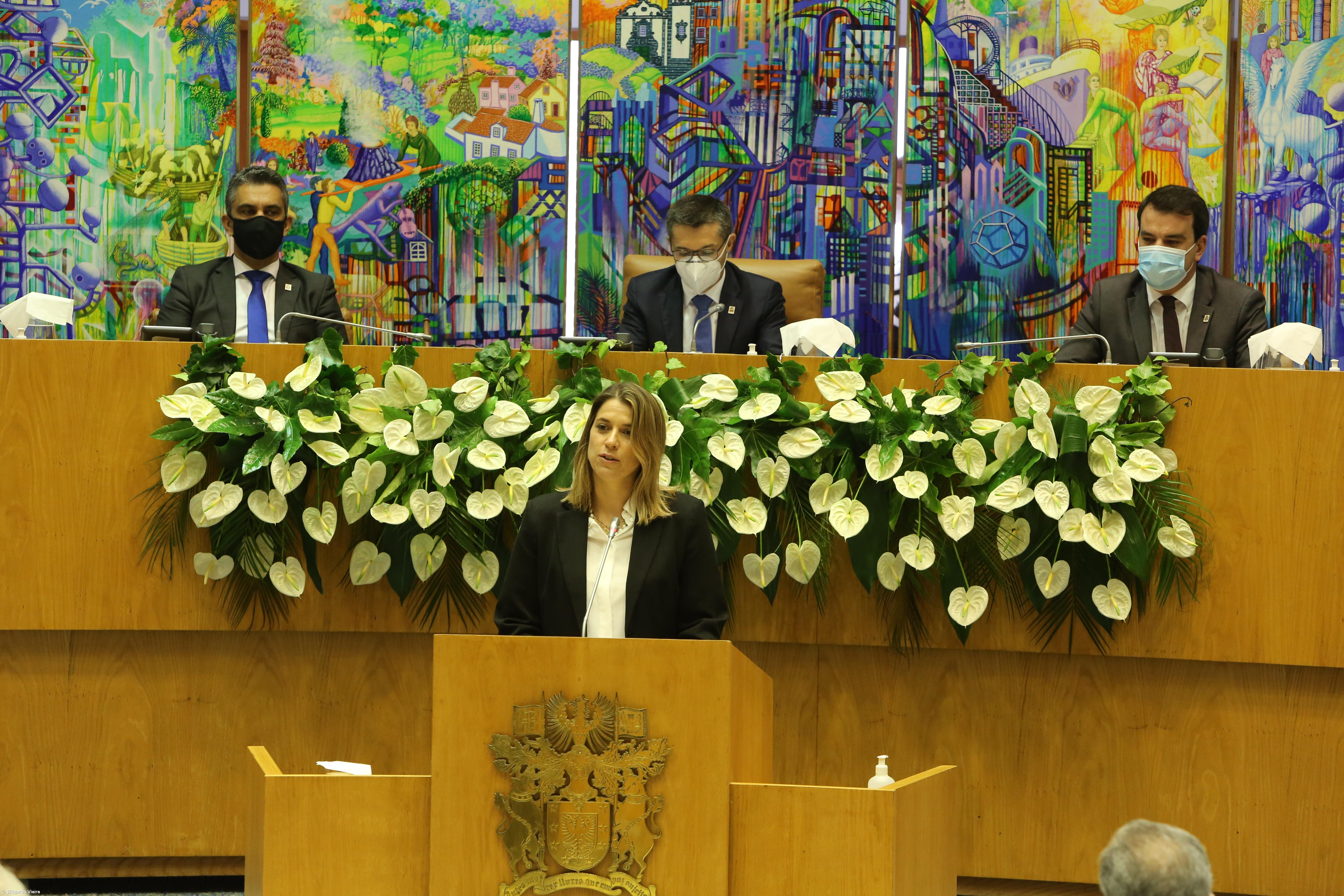
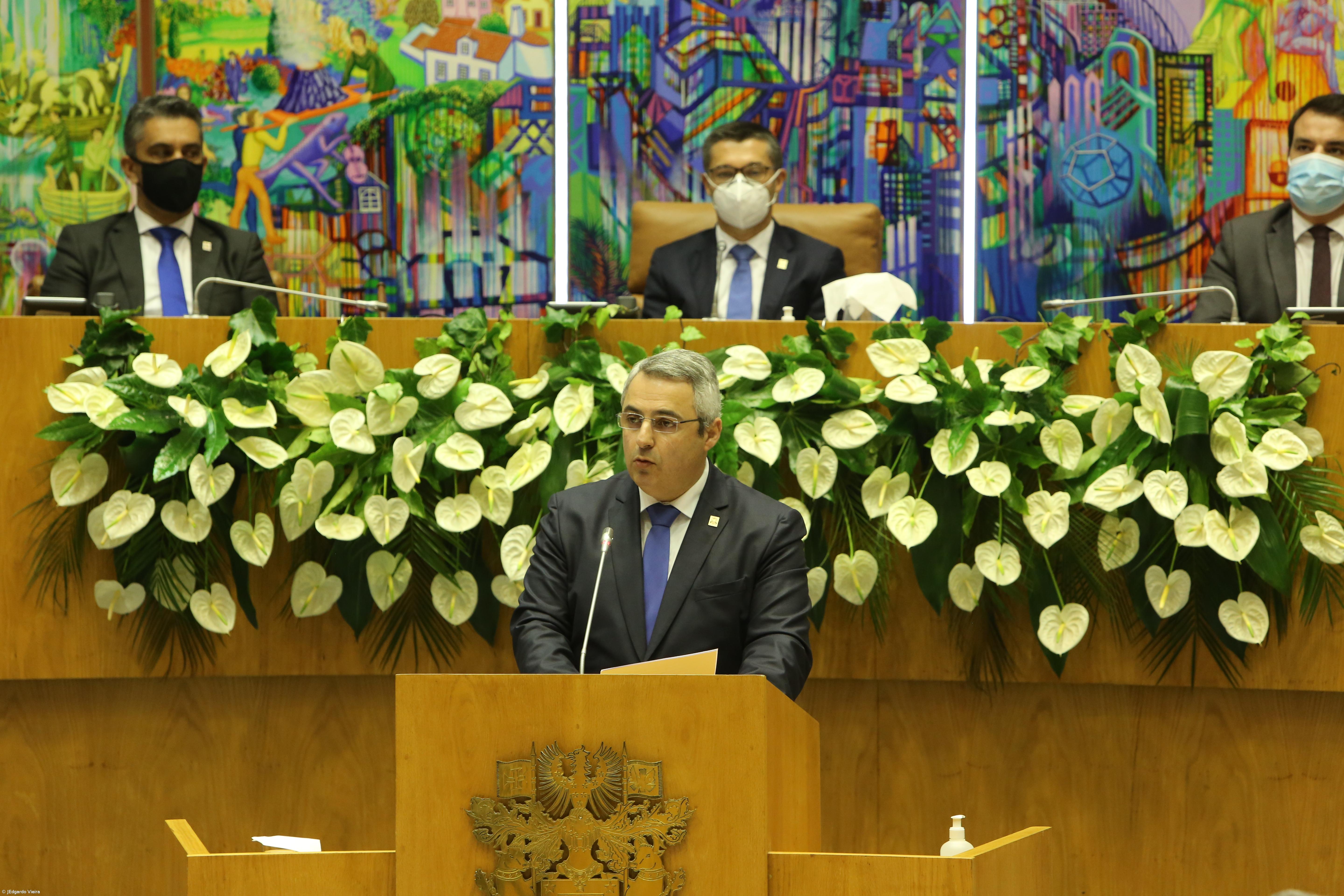
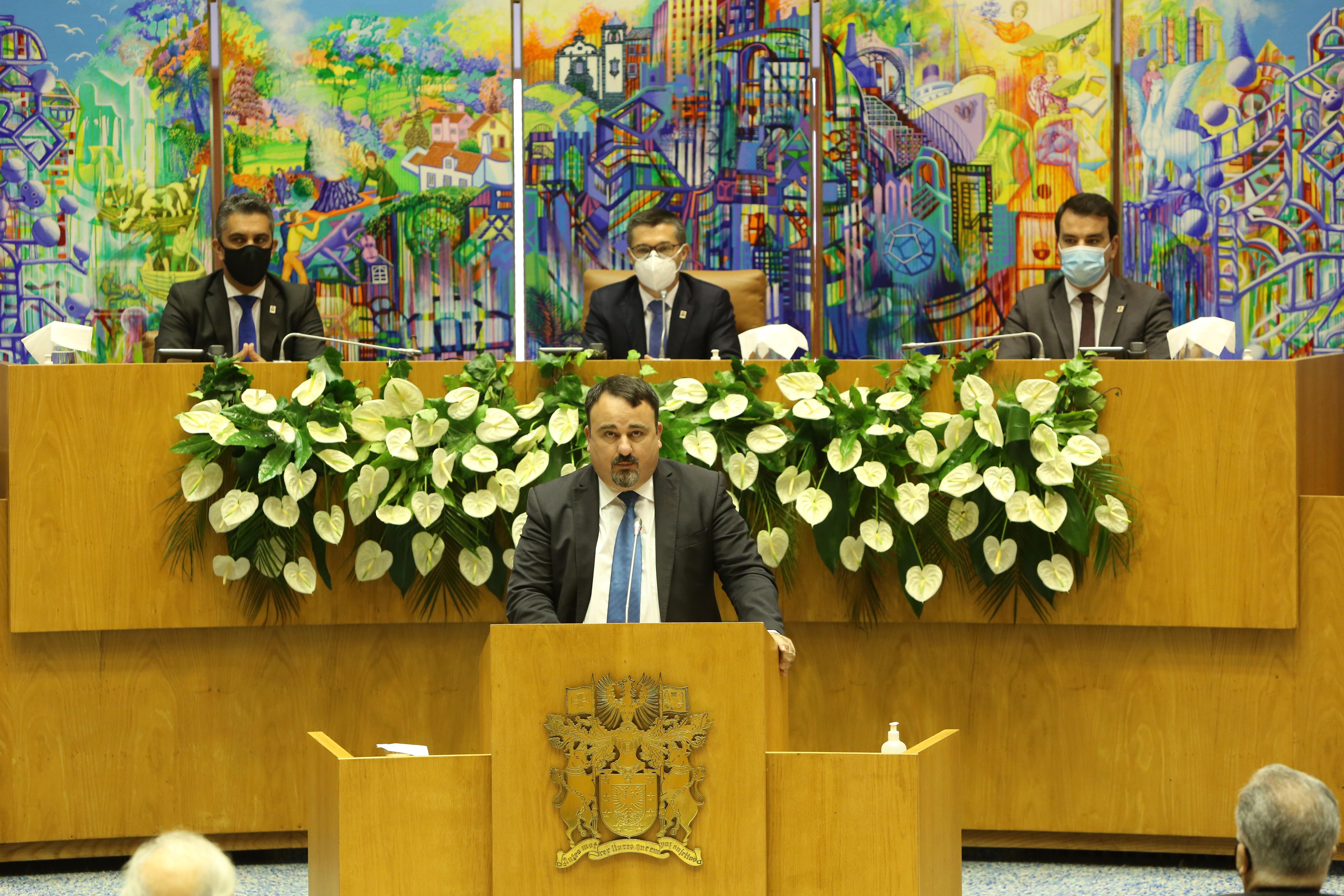
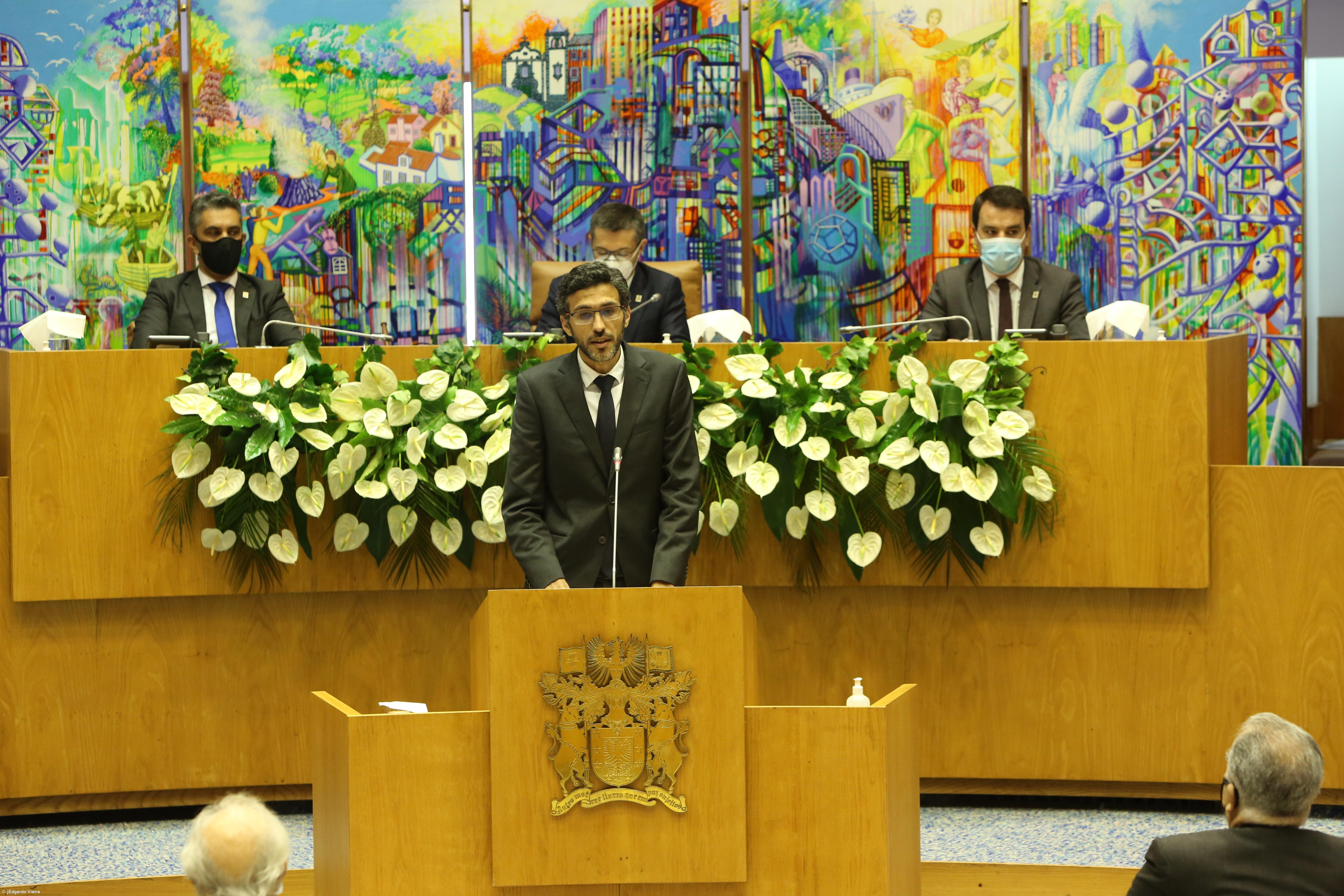
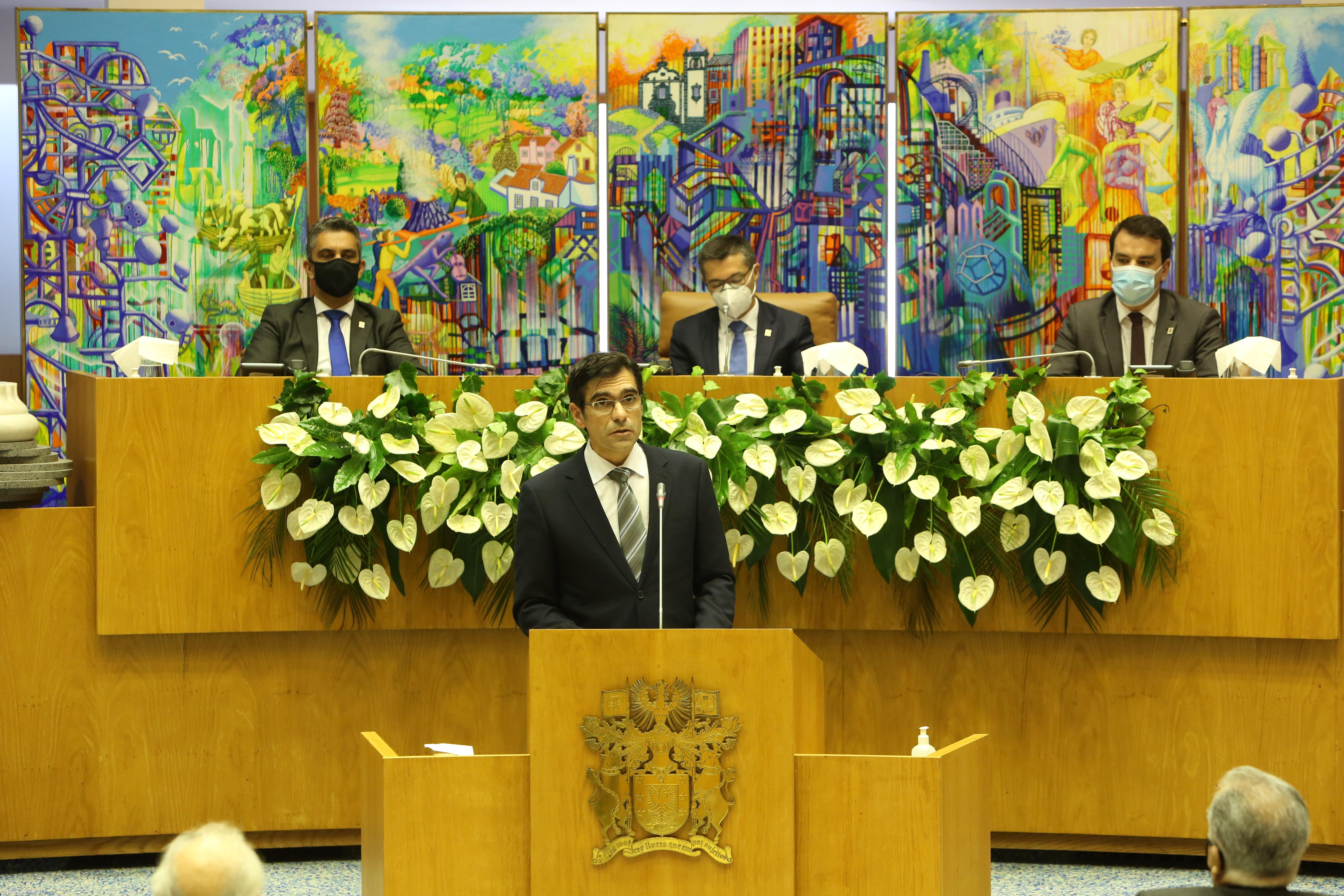
zores Day was celebrated at the Azorean Parliament, in the city of Horta, with speeches aimed at uniting the islands, fighting localism and strengthning autonomy.
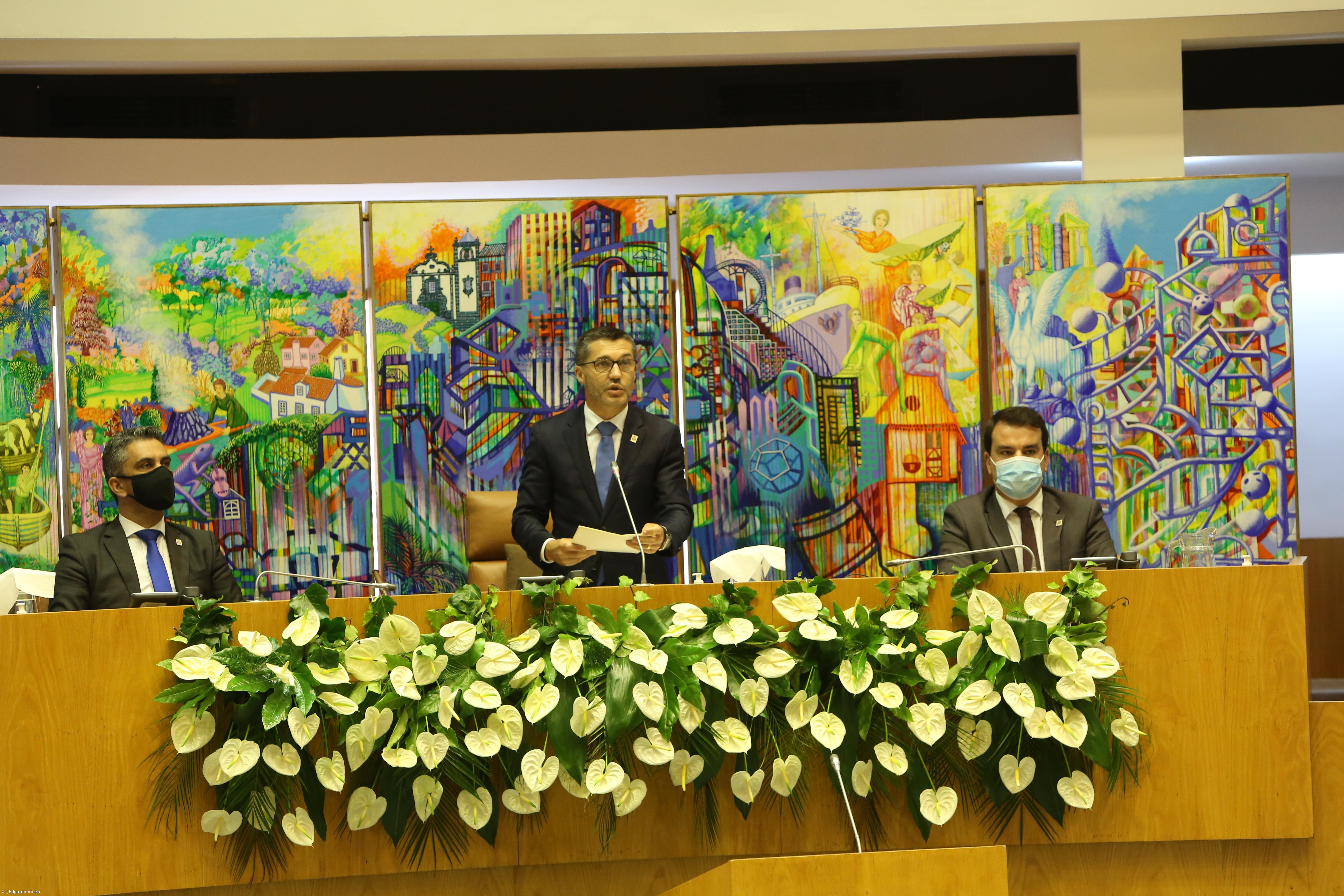
Luís Garcia, president of the Regional Parliament, said so in his speech: “At this particularly difficult moment, let us all make an additional effort to remain united, solidary and tolerant. We cannot waver, nor let meaningless divisions or outbursts harm the fight against this pandemic and halt the construction of the Azores we want”, he said.
The President of the Parliament paid tribute to those who are “on the front line” against Covid-19, greeted the families of those who died of the disease in the Azores, left “a special word of solidarity” to the population of the island of São Miguel, which has been the most affected by the pandemic, and urged the population to continue fighting the new coronavirus.
Luís Garcia asked for union among Azoreans, claiming that differences "should be a reason to celebrate and never to divide".
“Whenever, in the past, we faced difficulties and adversities, unity and solidarity, between islands and between Azoreans, were decisive to overcome the most complicated moments. It was like that after the 1980 earthquake, it was like that after the 1998 earthquake. This moment cannot be the exception”, underlined Garcia.
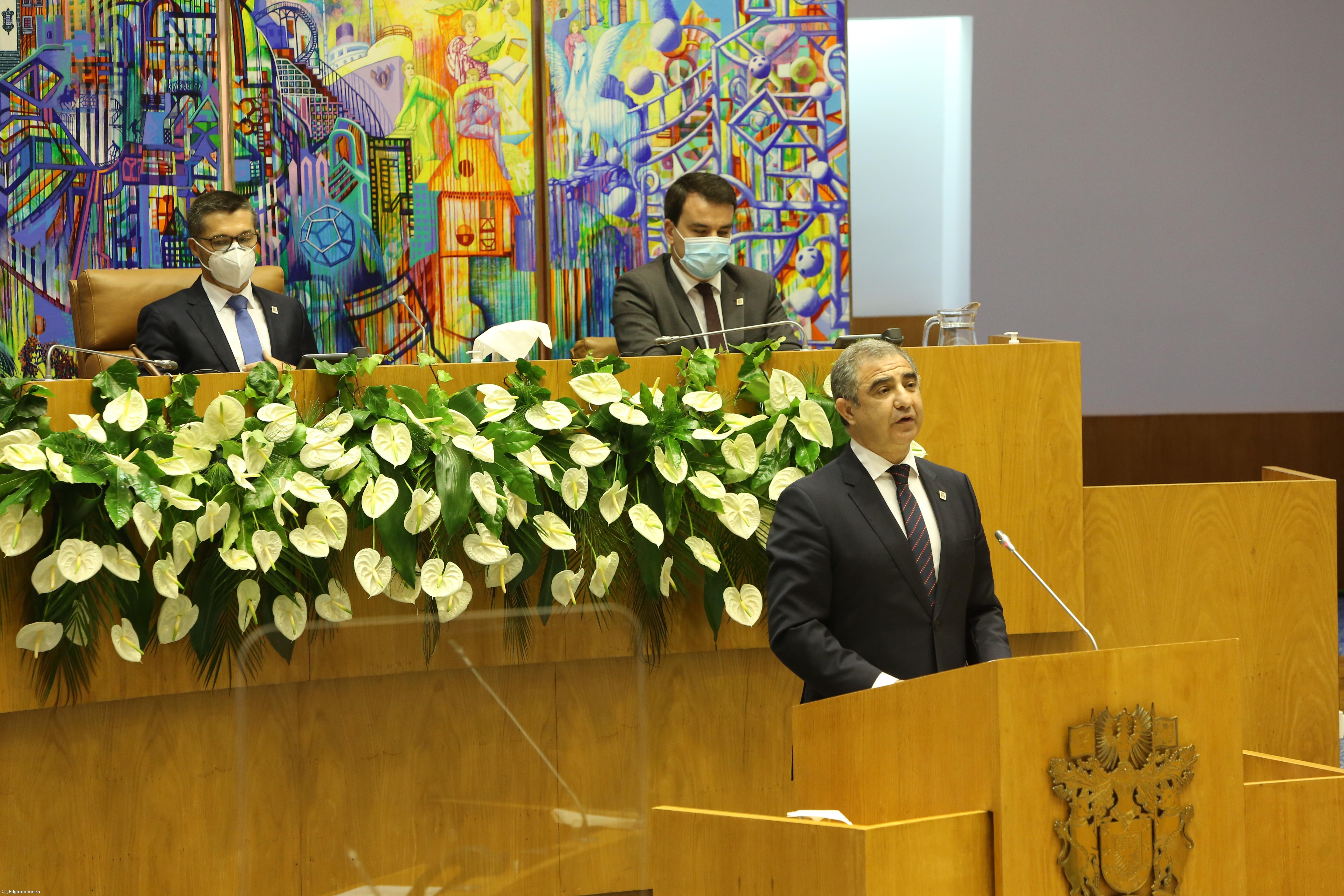
The President of the Regional Government followed the same line of thought, saying that “autonomy and unity are synonymous. If we get divided we will always be considered adjacent islands”, he stressed.
The President of the Government of the Azores recalled that "difficulties must not separate us", since once "divided, everything becomes even more difficult", safeguarding that "localisms are not the answer to any problem, they are a problem".
According to Bolieiro, the “archipelagic and ultraperipheral insularity, particularly the demography of each island without a hospital, demands special attention and different treatment also in response to the pandemic”.
It is necessary to “insist on the materialization of the European concept of outermost regions”, a concept “apparently dormant and that must be revitalized in the political framework of the European Union, but also nationally”.
Recalling that political autonomy was the answer to those who forgot about the Region, Bolieiro argues that autonomy cannot go backwards.
“There were times when we were forgotten. We were the adjacent islands. But democracy and our political autonomy have placed the Azores within the framework of a free country. Our political autonomy was the answer to those who forgot us and is the guarantee that none of our islands will be forgotten. Autonomy is the definitive answer for Azoreans. Autonomy can go forward, but it can never go backwards", declared Bolieiro.
According to him, the democratic political system "allowed the alternation of power" and "every political alternative has shown enthusiasm and respect for the celebration" of Azores Day.
PSD states that this new political scenario has been “very profitable” for the Region
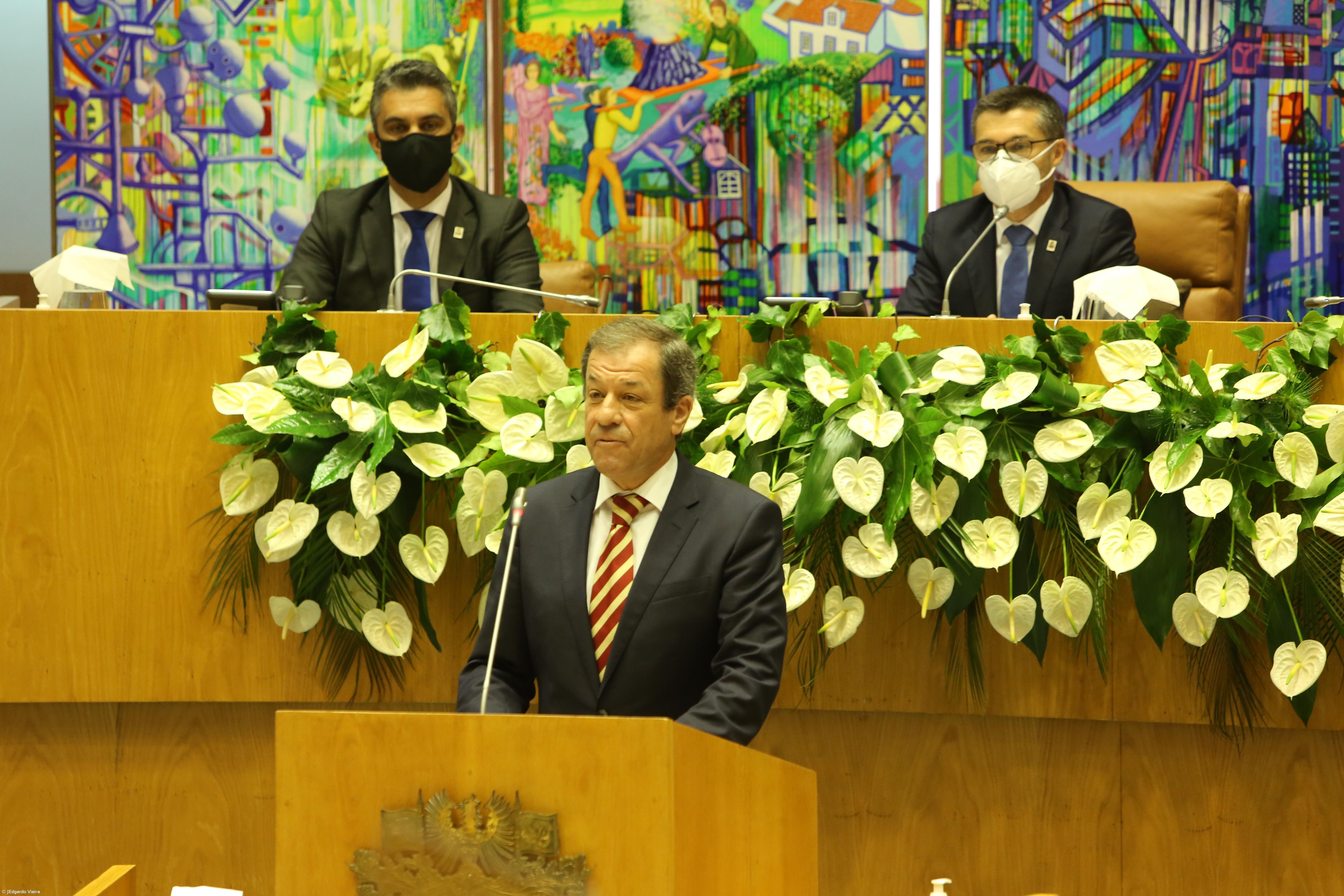
The leader of the PSD/Azores parliamentary group, Pedro Nascimento Cabral, states that the debate made possible by the new configuration of the regional parliament has proved to be “very profitable” for the social, cultural, economic and financial development of the archipelago.
According to the member of the parliament, in this “new era”, parties “have shown a sense of responsibility and have contributed to a broader debate, which has proved to be plural and indeed beneficial for the social, cultural, economic and financial development of the Autonomous Region of the Azores”.
The Social-Democratic parliamentary leader deems that, “as in many other occasions, in these islands in the middle of the North Atlantic, current generations face very difficult moments, marked by a pandemic that persists in taking time to leave”.
However, he added, as in the past, this troubled period will be successfully overcome in unity: "We firmly believe that all the efforts made by the regional executive, but above all by the spirit of sacrifice shown by all Azoreans, will soon be rewarded".
CDS-PP states that autonomy is the “free expression” of the Azorean identity
The leader of the CDS-PP/Azores parliamentary group, Catarina Cabeceiras, declared that autonomy and self-government are the “free expression” of the Azorean identity, whose unity is built by giving “maximum importance” to all the islands.
“This Azorean unity is built persistently by giving the utmost importance to all the islands and to each one of them. Economic and social development, by improving the lives of Azoreans, is, in addition to a question of elementary justice, an undeniable achievement of our democratic autonomy”, declared the parliamentarian.
Catarina Cabeceiras stated that everyone is involved in the defense of autonomy, from citizens to parliament, from the government to those representing the archipelago in the Republic.
"We can never forget that our autonomy is not the point of arrival, but the point of departure", she stressed.
National and European solidarity did exist at the "worst moments", accuses PPM
The leader of the PPM/Azores, Paulo Estêvão, mentioned that national and European solidarity "did not come at the worst moments" of the crisis created by the Covid-19 pandemic.
“This crisis has also brought harsh lessons for the future. The solidarity of the Portuguese State and the European Union did not come at the worst moments of this crisis, when it was essential and urgent”, said Paulo Estêvão, who is also the party's parliamentary leader.
The PPM leader stated, in his speech, that “next time - and there is always a next time - autonomy and responsiveness must be incomparably better”.
“We must have an autonomous fund set aside to face economic crises or major natural disasters. We must have a greater capacity for response. A true autonomy presupposes great independence of means. And we still do not have that. But we will have it”, he stressed.
PS/Azores defends that it is necessary to motivate Azoreans for autonomy
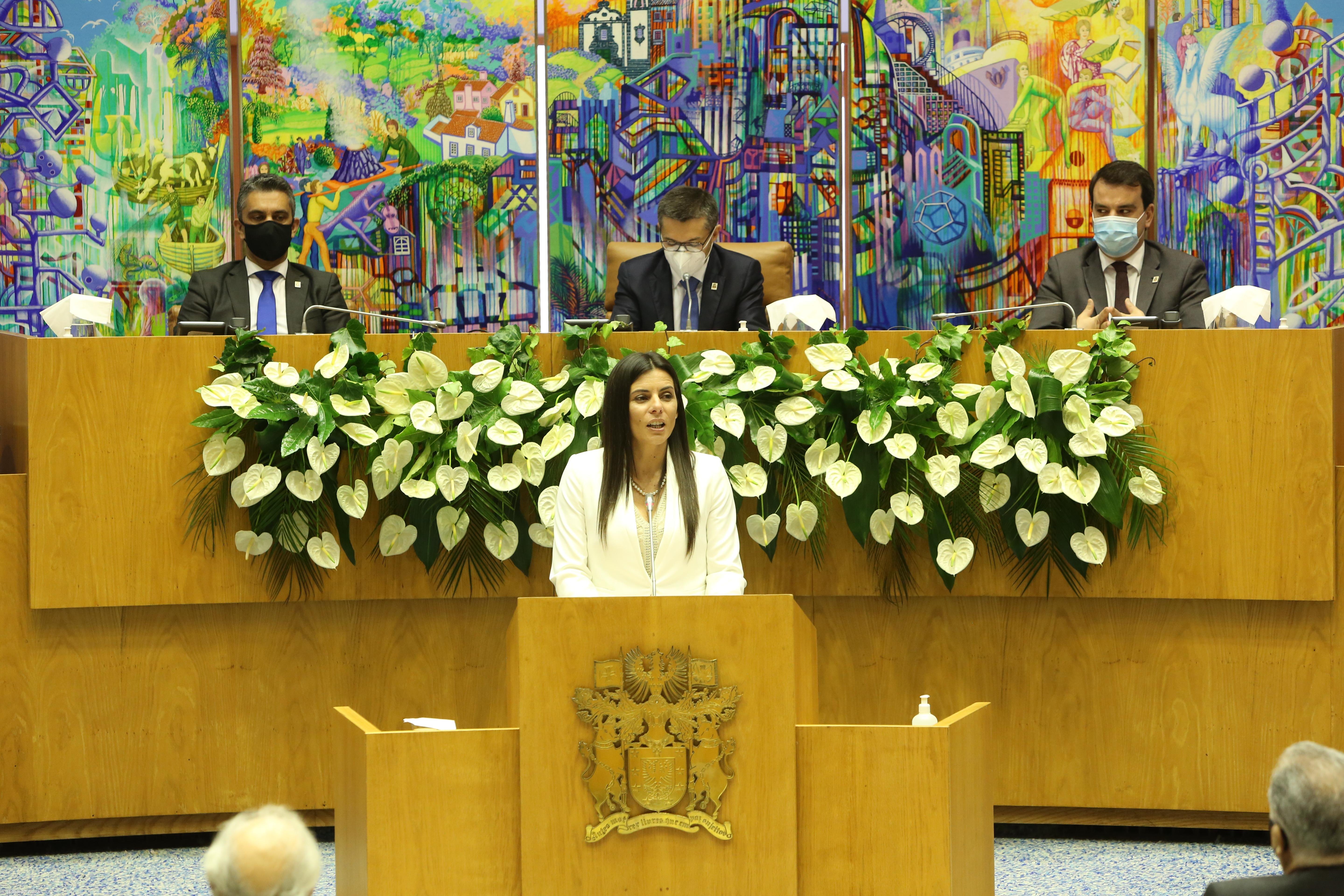
The socialist parliamentarian Marta Matos defended that the autonomy of the Azores can only be deepened if it motivates Azoreans to do so, claiming that it is necessary to promote an “autonomist citizenship”.
Our autonomy is meant to last in the time, to be enhanced and developed, to be recognized and cherished by us all; it should thus be defended by all Azoreans."
The socialist parliamentarian also stated that the autonomy of the Azores is “a successful project”, which allowed “achieving economic and social development and progress”, as well reinforcing “the awareness of regional unity and cohesion”. Nevertheless, Matos defended that it is necessary to "recover and maintain the non-conformity and ambition of those who launched it".
“We need to broaden our horizons, renew our objectives and expand our capacity for intervention. It is necessary to promote an autonomous citizenship, calling on Azoreans to participate in defining the future of our land”, she stressed.
In a “challenging” time, Matos added, it is “essential” to uphold our pride in the autonomy of the Azores, but also to build its future, with the solidarity of us all.
BE/Azores calls for a solidarity autonomy and for the unity of all islanders
The leader of Bloco de Esquerda's parliamentary group in the Azores, António Lima, refered that the Region's autonomy must be a solidarity one, claiming that only autonomy can guarantee the unity of all islanders.
“Political-administrative autonomy is meant to be solidary. If it is not, then it fails one of its own purposes. Solidarity autonomy is an objective inscribed in the constitution and should guide its strengthening, as well as the laws this parliament approves and the policies that regional governments set forth”.
According to António Lima, “only autonomy ensures the unity of the nine islands of the Azores”.
"There is no place in democratic and solidarity autonomy for centralisms, whether in the traditional sense, whether in the sense of accumulating power in some elites, which is contrary to overcoming the century-old inequalities of this land", he stressed.
PAN denounces “separatist exploitation” of the islands
The leader of PAN/Azores, Pedro Neves, stated that the Region is at a “crossroads” between “Azorean cohesion” and “the sovereignty of separatist exploitation”, according to which “each island should look after itself”.
“We have been at a crossroads for more than a year due to the fight against the pandemic, which seems to have no end. But we are also at a crossroads between the indivisible awareness of Azorean cohesion and the pride of separatist exploitation, which seeks to influence social conscience with the idea that we are alone and that each island should look after itself”, said the parliamentarian.
Pedro Neves deems “this is a skillful use of a very fragile moment for society, of the difficult times in which we have lived for more than a year, of a war in which people died, which killed companies, which affected the solidity and psychological strength of each person”.
IL praises the enhancement of autonomy
The representative of Iniciativa Liberal in the Azorean parliament, Nuno Barata, defended that the enhancement of autonomy in the Azores will be all the deeper the greater the plurality of contributions.
“Parliament is the strength of our autonomy and the reinforcement of the autonomic process will be all the better the more plural and representative the contributions to that reinforcement are”, he said.
The Liberal parliamentarian underlined that the Azorean parliament again plays the “role of the central institution of autonomy”, with a new political-party framework in which eight parties are represented.
Chega states it is necessary to correct asymmetries
The leader of the Chega parliamentary group in the Azorean parliament, Carlos Furtado, defended that it is necessary to “correct social and intergenerational asymmetries” and to trace a “new direction” for the Azores.
“Our generation will have the difficult task of correcting social and intergenerational asymmetries and plotting a new, more responsible and comprehensive, more capable and empowering, path, more protective of our greatest assets, our land and our values, because that is the only way the goshawk flight will go further,”he said.
For Carlos Furtado, it is necessary to honor heritage and face new challenges and threats, which “do not come only from the ocean and mother nature”.
Members of the Parliament speak for the first time on The Day of the Azores
The Day of the Autonomous Region of the Azores, a regional holiday celebrated on the Holy Spirit Monday, was established by the Azorean Parliament in 1980, to commemorate the Azores and its autonomy. And, for the first time, the eight parties with parliamentary seat took the floor, when usually only the president of parliament and the president of the Azorean government would do so in the solemn session.
This year, the solemn session of the Azores Day took place at the Parliament of the Autonomous Region of the Azores (while last year it was held online), without awards and without the traditional “Holy Spirit Soups”, due to the constraints arising from the Covid-19 pandemic.